Queensland Energy Roadmap 2025: Key implications for renewable and storage developers
November 24, 2025
The Queensland Energy Roadmap 2025 was released on 10 October 2025, marking a significant policy shift that will reshape the state’s energy landscape over the next five years. For developers of utility-scale renewable and storage projects, this represents a fundamental change in approach that requires careful analysis of both the opportunities and the very real risks it creates.
Renewable targets cut and coal extended
The previous government’s 2022 Energy and Jobs Plan included renewable energy targets (50% by 2030, 80% by 2035) and ambitions to retire state owned coal-fired power stations by 2035.
The 2025 Roadmap replaces the previous policy and will repeal renewable energy targets, in favour of what the Government calls a “flexible, market-driven approach” while maintaining Queensland’s net zero by 2050 commitment.
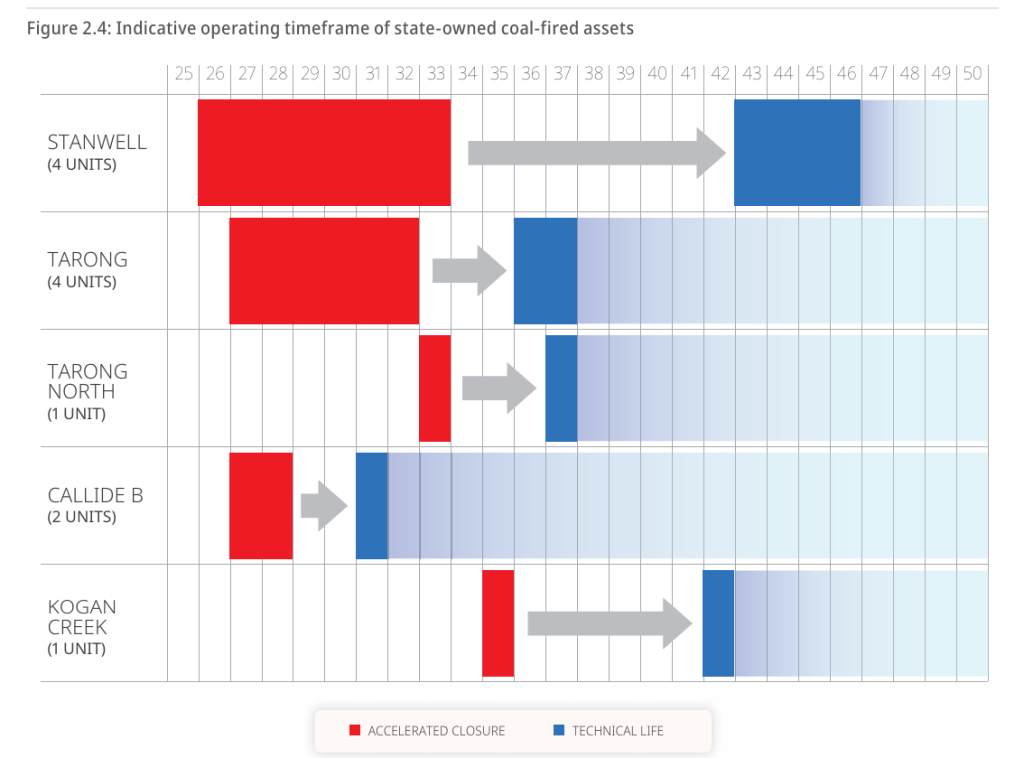
Coal-fired generation will be subsidised through the Electricity Maintenance Guarantee to extend operation into the 2040s. This substantially extends previous retirement timelines (from accelerated closure to at-least technical life) and introduces significant uncertainty about when new capacity will be genuinely needed.
What this means for project developers
Private sector as risk bearer
The Government has explicitly pivoted toward private sector-led infrastructure delivery. Government-owned corporations (GOCs) will focus on maintaining existing assets while new infrastructure will be driven by private investment and commercial partnerships.
The mechanisms include:
- $400 million Queensland Energy Investment Fund managed by QIC, focusing on gas, renewables, and storage technologies.
- QIC Investor Gateway providing a structured pathway for developers to partner with government on energy projects.
- Market-led approach to Regional Energy Hubs, replacing the previous Renewable Energy Zone framework.
Opportunities for storage
The Queensland Energy Roadmap explicitly identifies storage as “essential to firm variable renewables and manage minimum system load.” However, there are no specific utility-scale battery targets or support mechanisms. Developers can expect the federal Capacity Investment Scheme (CIS) to provide the main policy support for their battery projects in Queensland.
The Queensland Government has also walked away from “mega” pumped hydro projects like Pioneer Burdekin, which was cancelled in late 2024. Instead, the government will now focus on “smaller, more manageable” pumped hydro projects. QIC has been tasked with leading investment partnerships on all prospective smaller pumped hydro projects, and will take responsibility for assessment of the Mt Rawdon, Big T, Capricornia, and Borumba projects. The consolidation under QIC aims to provide a more consistent approach to assessment and investment decisions.
Support for new gas generation
Queensland’s state-owned generators will continue to progress options to deliver 700+ MW of new gas-fired generation. The Roadmap also includes a market sounding process for an additional 400 MW of new gas-fired capacity in Central Queensland through the QIC Investor Gateway.
For storage developers, this reinforces the need to demonstrate competitive economics and reliability metrics that can match or exceed gas peaking plants.
Social licence and community engagement
The Roadmap emphasises community support and responsible development, including a new Code of Conduct for renewable energy developers to “guide responsible behaviour and set community expectations.”
Recent project cancellations (e.g. Forest Wind Farm and Moonlight Range Wind Farm) demonstrate this government’s willingness to halt projects lacking community support. Developers will need to prioritise genuine stakeholder engagement from project conception, not as an afterthought.
The community benefit provisions already added to the Planning Act will remain, and developers should expect heightened scrutiny of their consultation processes.
Success factors for project developers under Queensland Energy Roadmap
The Queensland Energy Roadmap 2025 represents a material policy shift. While repealing statutory renewable energy targets and extending coal operations, it maintains the net zero 2050 commitment and explicitly invites private sector investment to lead new infrastructure development.
For utility-scale renewable and storage developers, success will require:
- Strong community engagement and social licence
- Commercial discipline and bankable project structures
- Strategic engagement with QIC and the Investor Gateway
- Patient capital that can weather coal exit uncertainties
Energy Synapse provides strategic advisory and modelling services to project developers navigating complex policy environments. Contact us to discuss how Queensland’s Energy Roadmap affects your project pipeline.